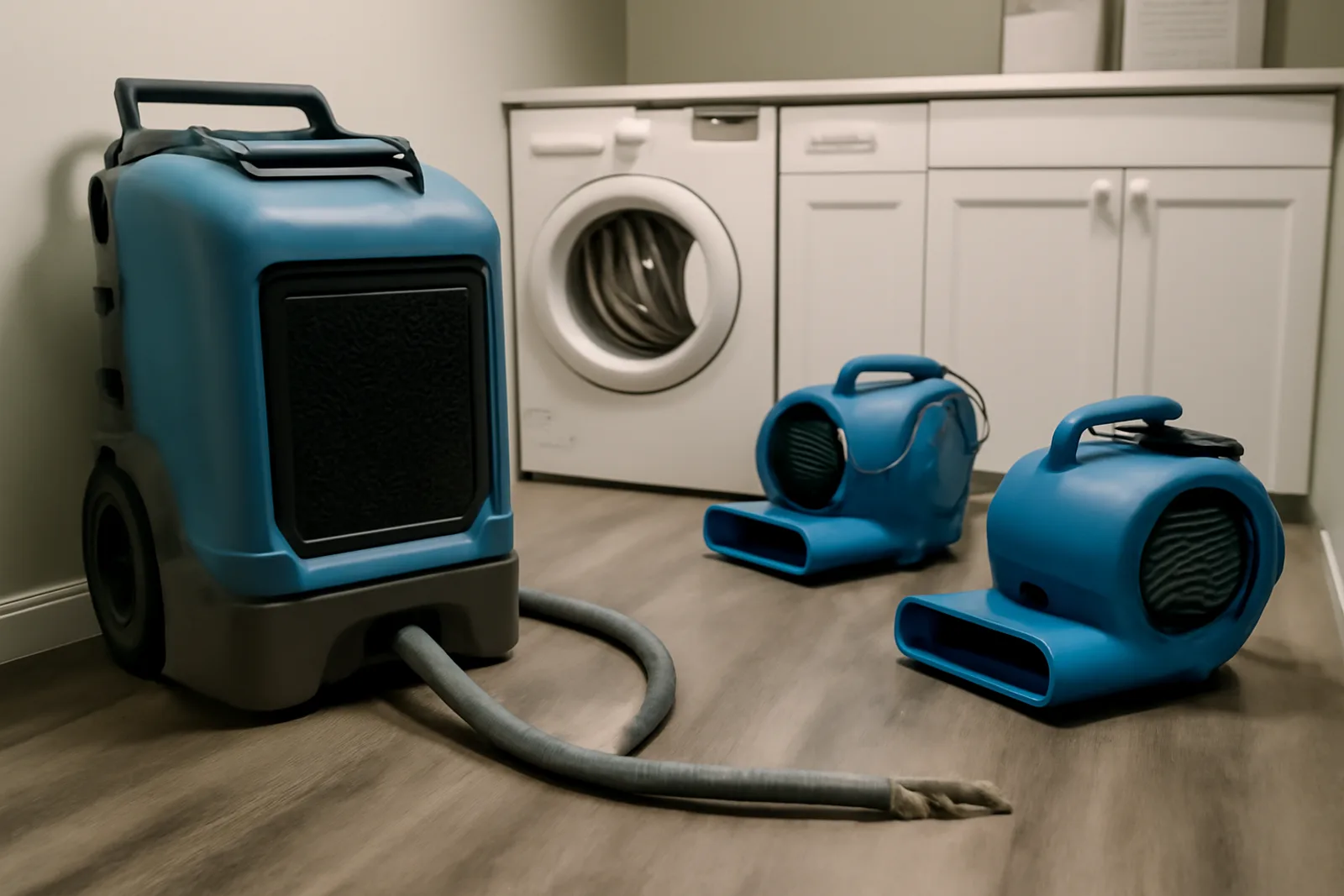
Once a South Hackensack fire is knocked down, the clock starts on soot acidity and on the wet framing the suppression water created. Our approach treats the building as a system — flames, smoke, and water each get a dedicated step rather than one blanket cleanup. Drenched framing in a Bergen County winter starts growing mold fast, which is why we dry while we clean rather than after. Documentation tracks every phase, from stabilization through deodorization, so nothing is left to a verbal account. Talk to us at 908-228-9765 and the smoke cleanup is underway today.
- Soot + smoke odor removal
- HVAC decontamination
- Pack-out + content cleaning
- Hydroxyl odor treatment
- Structural rebuild
- Insurance-scope documentation
The Two Losses Running At Once
Once a fire is knocked down, the clock starts on soot acidity and on the wet framing left behind. Soot deposited inside the HVAC becomes an odor reservoir that pushes residue back into the living space every time the system runs.
The response covers board-up, structural drying, soot and residue cleaning, and odor neutralization as one sequenced job. Salvageable contents are inventoried, packed out, and cleaned off-site while the structure is restored, then returned once it is ready.
What Finishes A Fire Restoration
If the smoke smell came back weeks after the work, the odor was masked, not removed. We treat the air handler and the runs, not just the registers, because that is where the odor reservoir actually sits.
We do not upsell a duct replacement the system does not need, and we do not skip one it does. When source removal, material removal, and treatment are all done, the smell does not come back next month.
Beyond a single service line
A property loss in South Hackensack rarely stays in one lane — fire damage restoration often overlaps with water removal, storm damage restoration, mold remediation, sewage backup recovery, post-loss reconstruction, and our crew handles all of it under one contract. We dispatch the same standard to Fire Damage Restoration in Hackensack, Teaneck fire damage restoration, Fire Damage Restoration in Englewood, Fire Damage Restoration in Fort Lee and everywhere else across Bergen County.
If you searched for a restoration crew near you, you have reached a local team — call 908-228-9765 any hour. For background, read Sewage Backups in South Hackensack: Why They Happen, How They Are Cleaned, and What Prevents the Next One on our blog, or head back to our South Hackensack home page to see everything we do.